Social Work
To truly understand the privilege of education and leadership, one must step outside the classroom and into the service of others. For me, community service has never been about checking a box for a resume; it has been about applying the structural thinking of a debater and the empathy of a leader to real-world challenges. This realization became tangible through my commitment to Project Management and Information Systems in Education (PiE) and Orchid Garden Nepal—two experiences that fundamentally reshaped my understanding of consistency and impact.
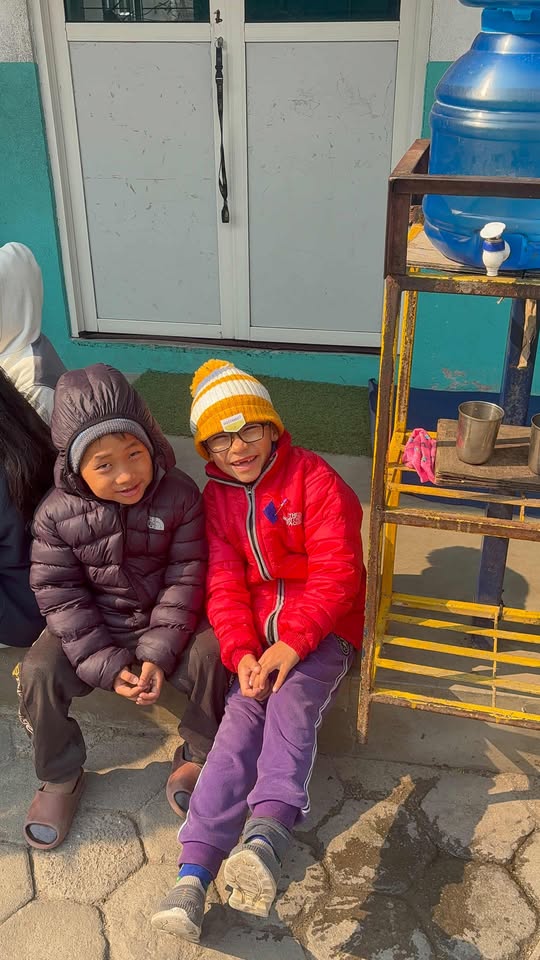
Two days a week, my routine begins long before the school bell rings. From 6:00 AM to 8:00 AM, I volunteer with PiE, teaching underprivileged children from the Thapathali area. Accumulating over 90 hours in this program has been a lesson in profound discipline, both for myself and the students. At dawn, when the rest of the city is barely waking up, these kids show up with an immense hunger to learn despite the systemic barriers they face. Parallel to this, my 80 hours of service at Orchid Garden Nepal—an organization dedicated to providing early childhood education and care to children from marginalized, low-income backgrounds—further grounded my perspective.
Service tests your adaptability in ways a controlled school environment never can. When you are standing in front of a class of children who lack basic educational resources, you realize there is no room for a "top of the class" ego. You have to learn to listen—not to counter an argument, as in a debate round, but to genuinely understand a human need. Managing these classrooms smoothly and ensuring that the structural gaps in their education are bridged, even in small increments, has been incredibly humbling. It reinforced the biggest lesson St. Xavier's taught me: being a leader means being omnipresent for your community and taking absolute accountability for establishing a supportive, civil environment around you, especially for those whom society has pushed to the margins.